Security through Obscurity: When secrecy alone is not enough (Part 2 of 2)
How can attackers hack you if they don’t know what to look for or how to find it? If you simply make everything in your network opaque, what could ever go wrong?



Before social media, before the internet, before TV, before movies and radio, people from all walks of life loved almanacks, which is how they spelled the word back then.
Following in this splendid tradition, SolCyber’s lovable mascot Amos provides regular, amusing, and easy-to-digest explanations of cybersecurity jargon and acronyms in AMOS THE ARMADILLO’S ALMANAC.
Even if you know all the terminology yourself, Amos will help you explain it to colleagues, friends, and family in an unpretentious, unintimidating way.
You can keep up with the latest Almanac entries by following @SolCyber on LinkedIn, searching for the hashtag #AmosArmadillo, or re-visiting this page.
A·B·C
AE (Authenticated encryption)
APT (Advanced persistent threat)
Black Friday
Further reading․․․
Breach fatigue
ClickFix attacks
Credential stuffing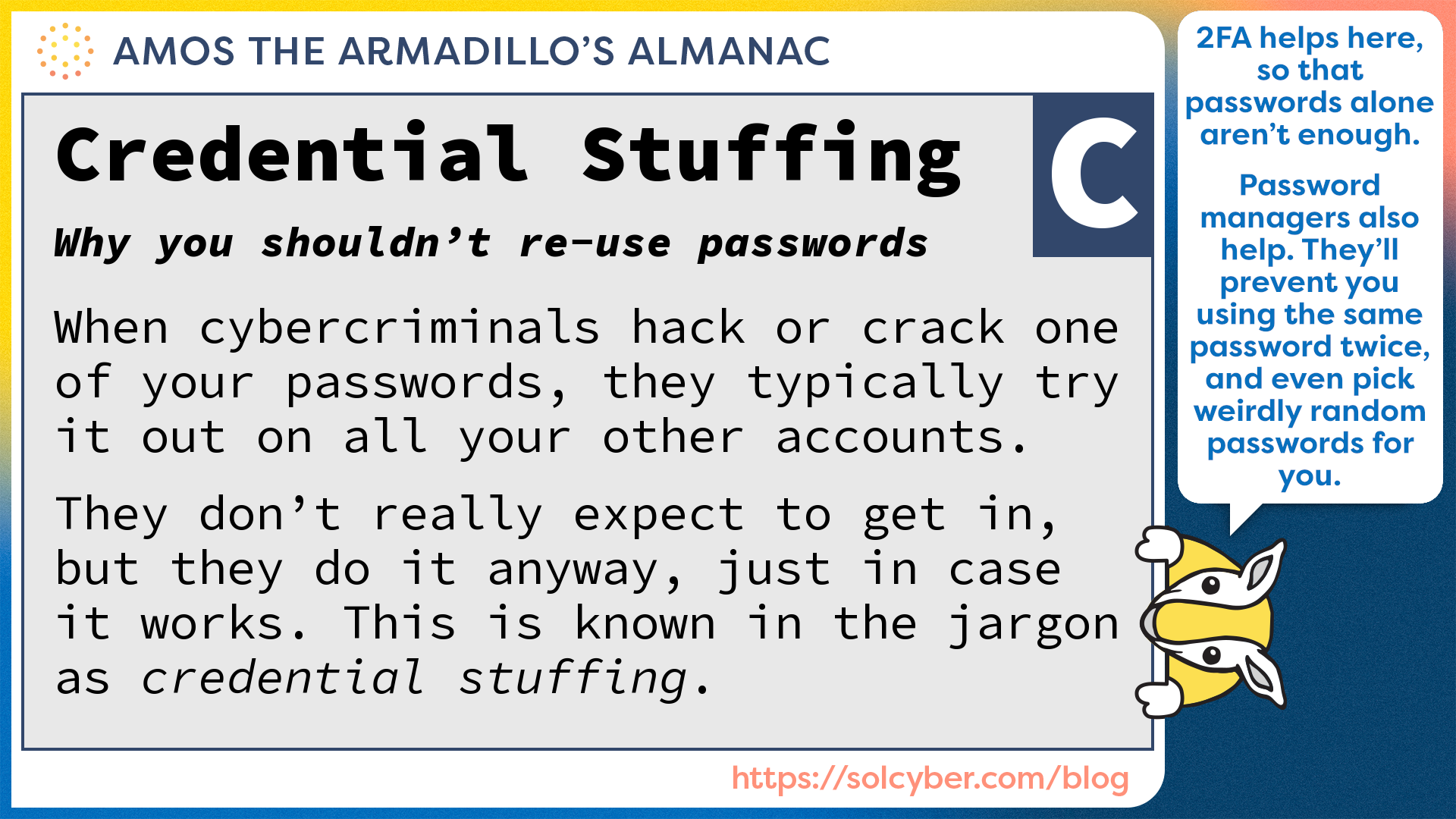
D·E·F
Daemon
DDoS (Distributed denial of service)
De-anonymization
Degaussing
DNS (Domain name system)
Easter egg
EoP (Elevation of privilege)
Further reading․․․
FDE (Full-disk encryption)
Further reading․․․
Fuzzing
G·H·I
GUID (Globally unique identifier)
Honeypot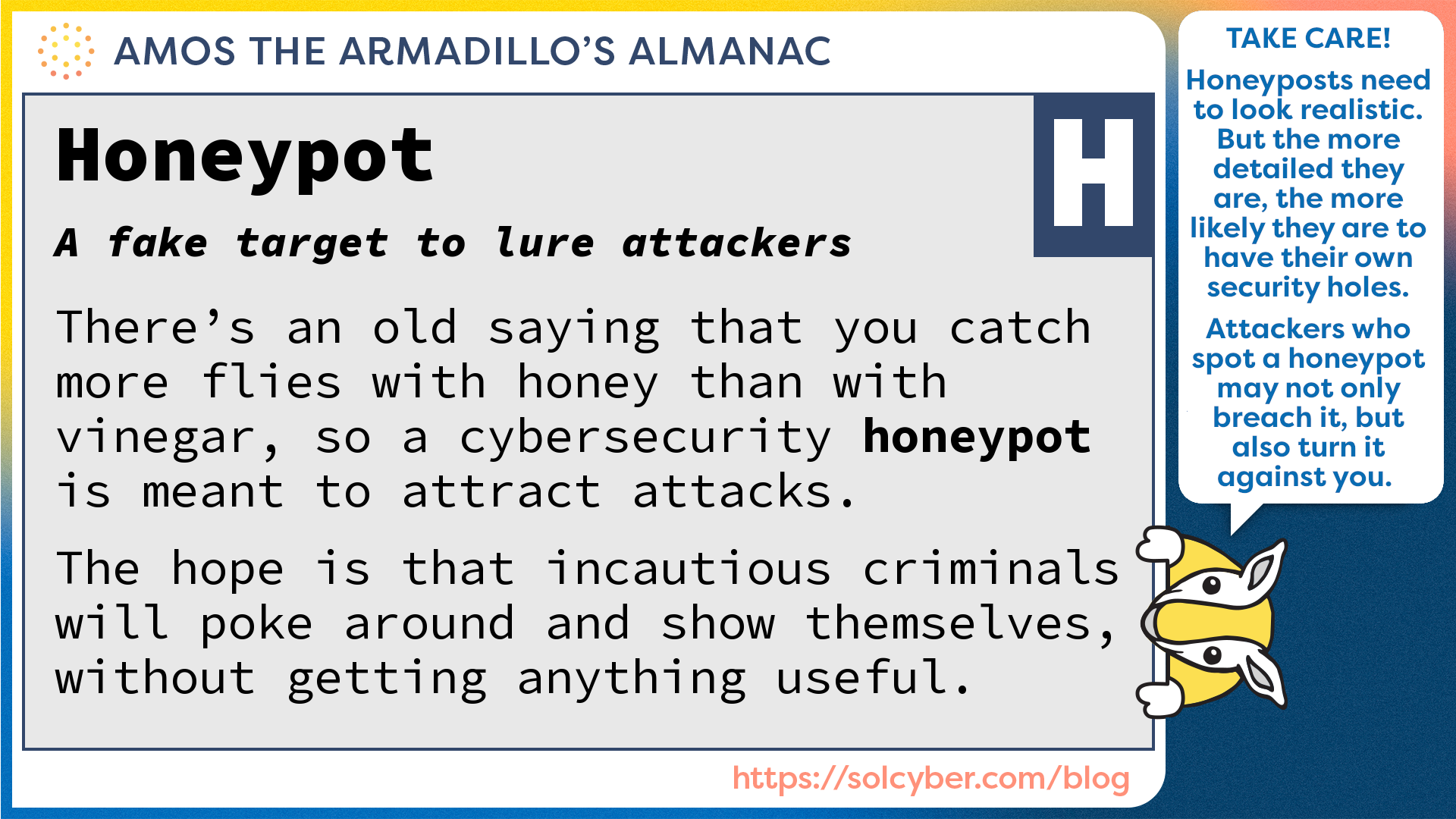
HTTPS
Further reading․․․
IAB (Initial access broker)
Further reading․․․
IDS (Intrusion detection system)
J·K·L
Jailbreaking
Jitter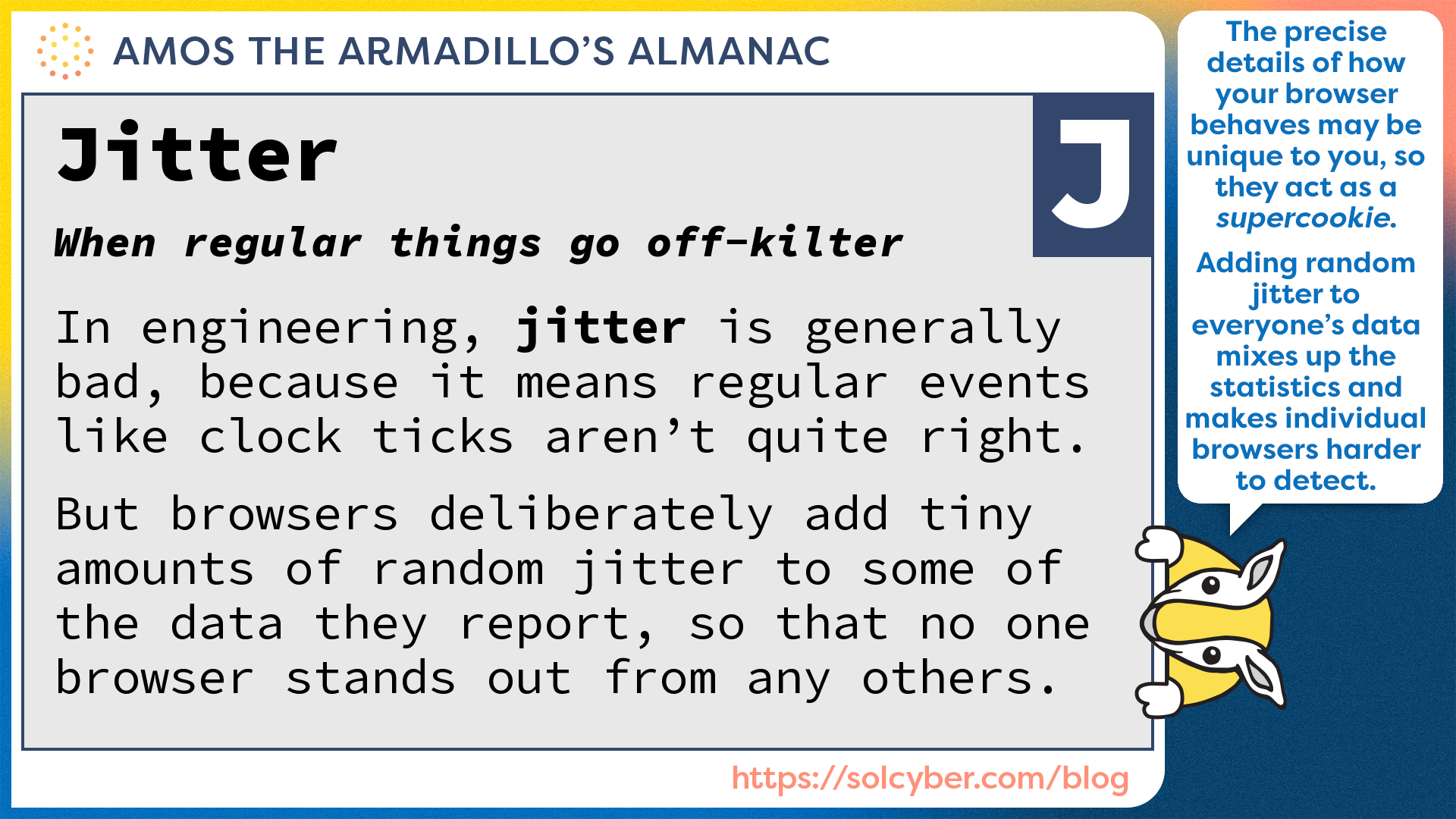
Further reading․․․
Kerberoasting
Kernel
Keylogger
LCG (Linear Congruential Generator)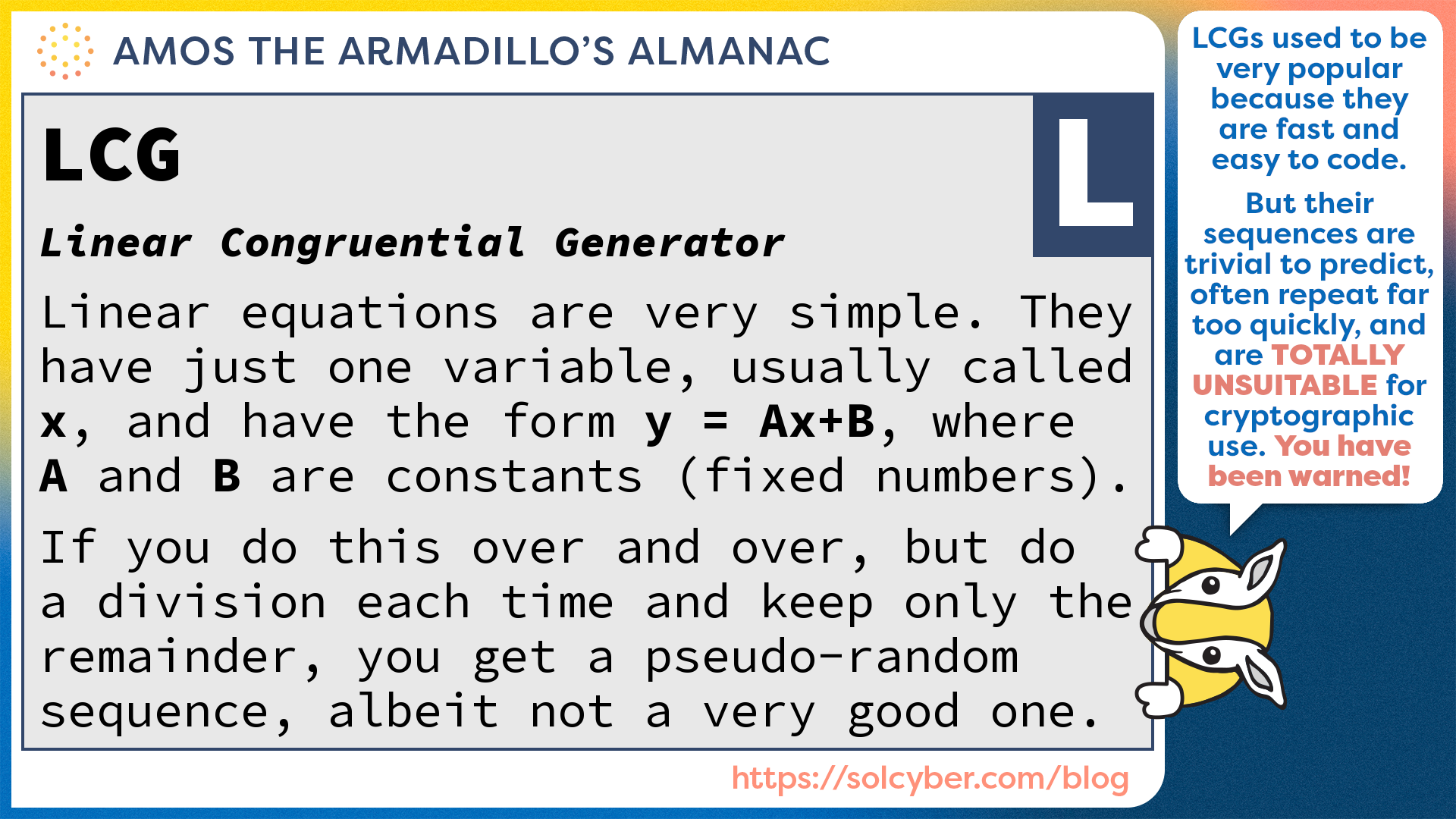
Log4Shell
M·N·O
MDM (Mobile device management)
MitM (Manipulator in the middle)
NSA (National Security Agency)
Octet
P·Q·R
Pass-the-hash
Pirate
Public key
Further reading․․․
Quantum apocalypse
Further reading․․․
Quishing
Further reading․․․
Race condition
RC4 (Ron’s Code Algorithm #4)
RCE (Remote code execution)
Responsible disclosure
Rootkit
Rust
S·T·U
SCIF (Secure compartmented information facility)
Secure boot
SIM farm
SIM swap
Singularity, the
Slopsquatting
Smart device
Sniffer
Social engineering
Supercookie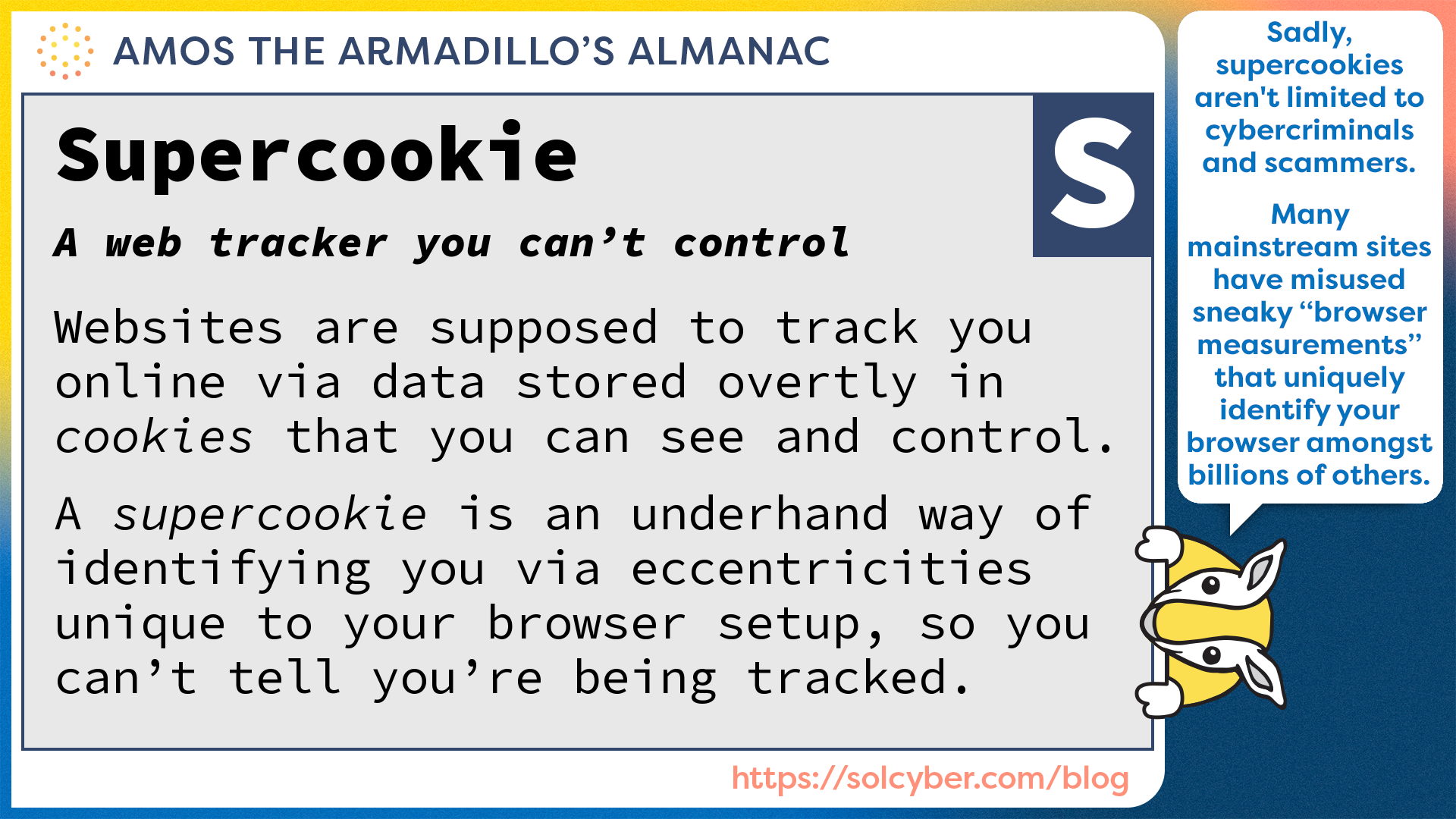
Further reading․․․
Sysadmin
Syzygy
Threat report
TOCTOU (Time of check to Time of use)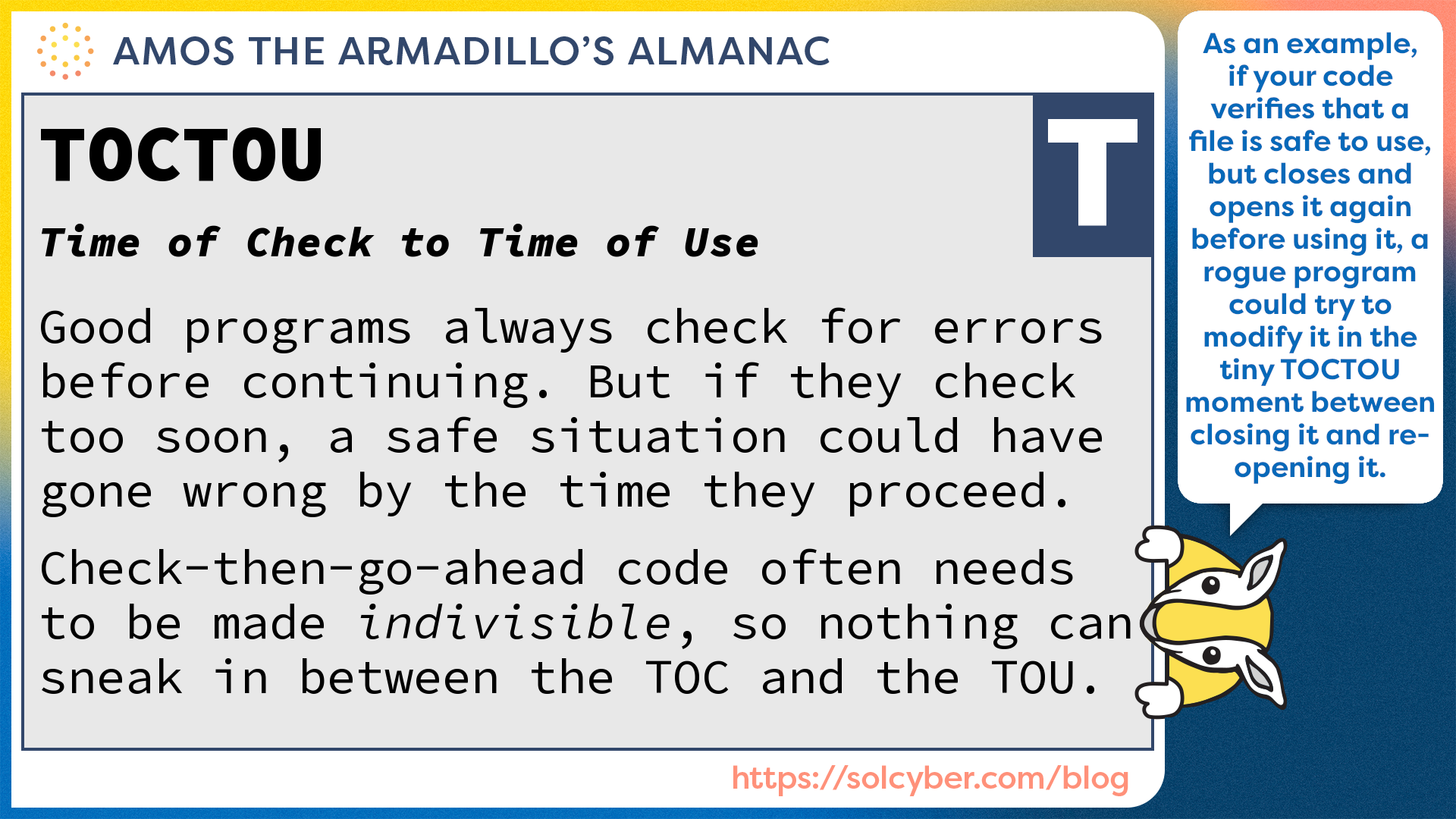
Further reading․․․
Typosquatting
User agent
V·W·X·Y·Z
VPN (Virtual private network)
Further reading․․․
Wiper
Further reading․․․
Worm
Further reading․․․
XYZZY
YAML (Yet another markup language)
Zero-click
Further reading․․․
Zero-day
Alphabetic index
A Advanced persistent threat • AE • APT • Authenticated encryption
B Black Friday • Breach fatigue
C ClickFix attacks • Credential stuffing
D Daemon • DDoS • De-anonymization • Degaussing • Distributed denial of service • DNS • Domain name system
E Easter egg • Elevation of privilege • EoP
F FDE • Full-disk encryption • Fuzzing
G Globally unique identifier • GUID
I IAB • IDS • Initial access broker • Intrusion detection system
J Jailbreaking • Jitter
K Kerberoasting • Kernel • Keylogger
L LCG • Linear Congruential Generator • Log4Shell
M Manipulator in the middle • MDM • MitM • Mobile device management
N National Security Agency • NSA
O Octet
P Pass-the-hash • Pirate • Public key
Q Quantum apocalypse • Quishing
R Race condition • RC4 • RCE • Remote code execution • Responsible disclosure • Ron’s Code Algorithm #4 • Rootkit • Rust
S SCIF • Secure boot • Secure compartmented information facility • SIM farm • SIM swap • Singularity, the • Slopsquatting • Smart device • Sniffer • Social engineering • Supercookie • Sysadmin • Syzygy
T Threat report • Time of check to Time of use • TOCTOU • Typosquatting
V Virtual private network • VPN
X XYZZY
Y YAML • Yet another markup language
Z Zero-click • Zero-day
How can attackers hack you if they don’t know what to look for or how to find it? If you simply make everything in your network opaque, what could ever go wrong?

ChatGPT’s release in late 2022 brought the AI industry out of obscurity, turned Nvidia into the fourth-largest company in the world, and generally reawakened the stock market. Yet it didn’t take long for the naysayers and FUD (Fear-Uncertainty-Doubt) mongers to start spreading terrifying news about AI’s risks—everything from supposedly AI-created malware to robots developing general intelligence and taking over the world. Seriously. However, 1.5 years later, we can now take a step back, evaluate what’s happened, —and what hasn’t— and […]


Who’s to blame for the stolen Bitcoins?



By subscribing you agree to our Privacy Policy and provide consent to receive updates from our company.