Hackers turn up the heat – in French food freezers
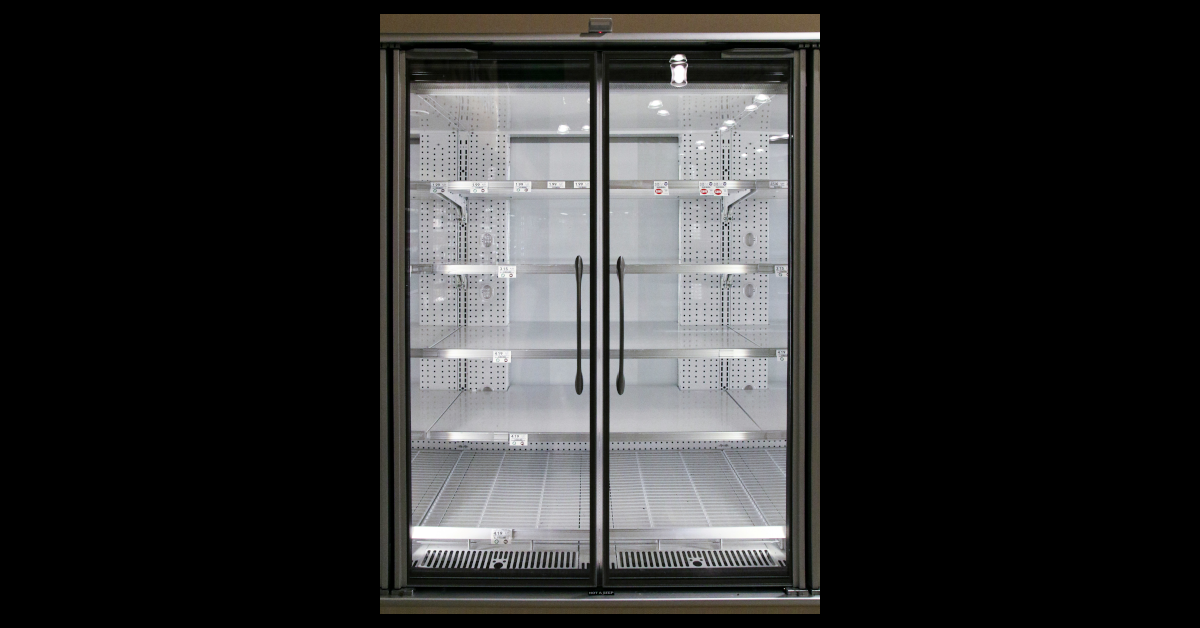
What if your freezer defrosted while it was still packed with food?




It’s not been a great week for cybersecurity in France.
We’ve had the comédie noire of unknown hackers, with unknown motivations – perhaps just show-offs doing it for the lulz, rather than to make money or serve a hostile foreign government – breaking into the refrigeration systems of several French supermarket chains, turning on the defrosting heaters in freezers full of food, and thereby slow-cooking it to ruination instead of preserving it.
And we’ve had the unfolding drama of customers of French cryptographic security business Ledger being ripped off, apparently to the tune of many millions of dollars in total, thanks to booby-trapped versions of its secure hardware devices showing up in legitimate stores and online marketplaces.
Ledger, if you haven’t heard of it before, pitches itself as a “fast paced, growing company developing a variety of products and services to enable individuals and companies to securely buy, store, swap and manage their digital assets.”

But in this case (if you will pardon the pun that follows), criminals somewhere in the supply chain have been opening up the cases of Ledger’s secure hardware cryptocurrency wallets, and adding what amounts to a second, unauthorized computer – an implant, in the jargon – that monitors the secure wallet activity and waits quietly for a chance to steal what is effectively the master recovery password for the victim’s digital assets.
The implants, based on pictures published by researchers who have purchased otherwise genuine, correctly packaged, shrink-wrapped Ledger devices from stores in both Singapore and Europe, have various shapes, sizes, and components, depending on the shape and size of the Ledger device they’re jammed into, but they seem to work in a similar way:
The implants, apparently, are installed with a burner eSIM provisioned in the implant, and a tiny antenna glued to the inside of the case.
An eSIM is a tiny, secure chip that is the digitally updatable equivalent of a swappable, read-only SIM card.
Using an eSIM instead of an old-style SIM card avoids the need for a conventional SIM socket and card, thereby saving space and reducing the thickness of the implant.
If you know what to look for, the implants pictured so far are reasonably obvious, because the official Ledger devices don’t have mobile phone connectivity, and therefore don’t have a mobile phone chip or a tell-tale antenna connection.
But looking for yourself means opening up your Ledger device, and introduces the risk that you might ruin a product you just paid hundreds of dollars for before you even get to use it.
It’s also not a reliable way, on its own, for users to detect that the device they just bought was tampered with somewhere in the supply chain (which could be anywhere from Ledger’s suppliers and manufacturers, through its delivery companies, packaging agents, distributors, and vendors, all the way to one-off implants embedded at individual stores that sell directly to customers).
After all, future versions of the implant – now that the current versions are known and pictures are circulating online – might avoid the external antenna, which is an obvious giveaway, or store-and-forward their stolen data in other ways, such as via short-range Bluetooth Low energy (BLE) transmissions piggybacking on widely-available public services such as Apple’s AirTag system.
The criminals in these attacks only need to exfiltrate 256 bits (just 32 bytes) of secret cryptographic data for each user who falls victim, one time only, after which they have no need to keep track of any future transactions the victim does via the device.

As Ledger’s support pages explain, it’s important to keep a physical record of your SRP, in case you lose or damage your hardware wallet:
Your Secret Recovery Phrase (or seed phrase) is the backup of all the private keys stored in a given crypto wallet. It allows you to recover all of your blockchain addresses, even without the original crypto wallet.
This 12-24 word phrase must be kept secure – it’s vital to never enter it into a computer or smartphone and to never share it with anyone as it allows anyone to restore your entire wallet.
Your seed phrase is the most sensitive piece of data: You must write it down correctly, otherwise you may lose access to your wallet.
In other words, attackers can assume that you will display your SRP at least once when you first set up the device, and that you’ll leave the words on the screen long enough to copy them down carefully by hand, given that they should never be entered anywhere unless and until you need to recover from a missing or broken device.

Although the key is represented by 24 words drawn from a table, each word represents just a few bits of the entire key, which is a single 256-bit random digital secret.
As mentioned above, this is all an attacker needs to recover and access your wallet, without ever getting hold of the Ledger device itself, because the SRP is intended to work even if your Ledger device is destroyed.
So, it was worth it for cybercriminals to design and build different implants for different Ledger devices, infiltrating them into the supply chain in apparently significant numbers at unknown points, and providing each one with a burner eSIM up front.
And, in the past few days, criminals have apparently set about stealing huge amounts of cryptocurrency from numerous crypto-holders – just over $100 million leeched from from just over 300 wallets, according to one report.
That’s a mean average of more than $300,000 per victim, entrusted to what they thought were secure hardware devices, but that had been modified at some point in the supply chain.
It’s reasonable to assume that these attacks – which are obviously related because of the very short interval during which they occurred – may have been hurried up by the criminals, in case media coverage about the implants led well-informed users to replace suspect devices (see below) in time to stop them being drained.
Reports suggest that multiple different types of implant are now known, apparently reflecting an evolving series of designs of increasing sophistication created over several months, if not years.
Implants have allegedly shown up in most if not all variants of Ledger’s devices, including the low-end Nano range, the Flex, and the Stax products.
So:
To be clear, switching to a new SRP (whether your wallet is made by Ledger or anyone else) if you think it may have been compromised isn’t a simple process, because your old SRP is enough on its own to recover your funds, with or without the old wallet.
It’s certainly very much more complex than setting a new login password, or starting a new one-time code sequence in an app such as Google Authenticator or Apple Passwords.
Loosely put, you need to set up a new hardware wallet that you do trust, with a new SRP that you are sure is not compromised, and transfer all funds in the crypto accounts from the old wallet to crypto accounts in the new one. (This is not a free step, because most transfers will eat up transaction fees of varying amounts, depending on how urgently you wish to complete them.)
Only when the suspect wallet, with the possibly-compromised SRP, has no funds still protected by it will your old SRP be worthless to criminals.
If you’re replacing a suspicious Ledger device, you’ll also need to decide if you want to change brands altogether, or to change your Ledger supplier, in order to boost your trust in the replacement.
To re-wrangle the famed poet Sir Walter Scott: “Oh, what a tangled web we weave/When first we crypto do receive.”
Ask how SolCyber can help you do cybersecurity in the most human-friendly way. Don’t get stuck behind an ever-expanding convoy of security tools that leave you at the whim of policies and procedures that are dictated by the tools, even though they don’t suit you or your business!

Paul Ducklin is a respected expert with more than 30 years of experience as a programmer, reverser, researcher and educator in the cybersecurity industry. Duck, as he is known, is also a globally respected writer, presenter and podcaster with an unmatched knack for explaining even the most complex technical issues in plain English. Read, learn, enjoy!
What if your freezer defrosted while it was still packed with food?
It’s a breach, but how did it really happen, and what should be done about it?

Happy Thanksgiving, wherever you may be. May your day be entirely free from Vogon poetry!



By subscribing you agree to our Privacy Policy and provide consent to receive updates from our company.