
More Linux panic – “GhostLock” bug in kernel could have spelled trouble for cloud servers
Kernel bug from way back in 2011 could have let guest users take over their host system.


The small to mid-sized enterprise (SME) market is wildly underserved in the cybersecurity sector, opening up massive opportunities for Managed Security Service Providers (MSSPs), as well as Managed Service Providers (MSPs) who could benefit from offering stronger security services as part of their overall IT offering.
Many MSPs are tempted to build out a security practice but this requires extensive investment and more importantly, will take time before the offering ever hits the market. Partnering with a MSSP can be a great way to get immediate access to a growing market and customer need.
But with 10,000 MSSPs in the US alone, who should you go with? Which one is going to help you grow your average revenue per user (ARPU) the most?
What should you look for? Here are three key components we believe are important to consider in order to maximize your sales efficiency, revenue potential, and reducing customer friction.
The MSSP’s offering and service should be easy for the MSP to sell. It’s fine if the MSSP’s sales reps themselves are selling the MSSP’s services like hotcakes, but if your team can’t sell it, then it’s worthless to you.
How long did it take for you to understand the MSSP’s sales pitch? Did it take more than one meeting? The more meetings it takes, the less likely your sales reps are able to replicate the pitch. While most vendors offer extensive training to sales reps, often totaling up to hundreds of hours, this poses two problems:
If the MSSP’s story can be told in 5 mins vs 60 mins, your reps are calling more prospects. In short, the overall sales-prop and value is better when it’s intuitive.
The formula is:
Easy sales = faster sales = more revenue for you.
If your potential MSSP partner isn’t making it easy for you, look elsewhere.
While the direct revenue from selling the MSSPs service is important, it’s just as important that the MSSP actually helps your customers reduce cyber risk.
According to IBM’s 2021 Cost of a Data Breach report, the average cost of a data breach rose 10% from 2020 to 2021, the highest year-over-year increase in seven years. The average cost of a data breach is now $4.24 million, with an average of $1.59 million of that coming from lost business because of the breach.
If your customer is breached, your entire business is at risk including your existing MSP service contract. Partnering with the right MSSP means happier customers, better customer retention rates, and a much higher customer lifetime value for the MSP.
A quick way to validate whether a MSSP is up to the task is to ask the following:
This is where most security vendors fail. They do not understand your business and how MSPs make money.
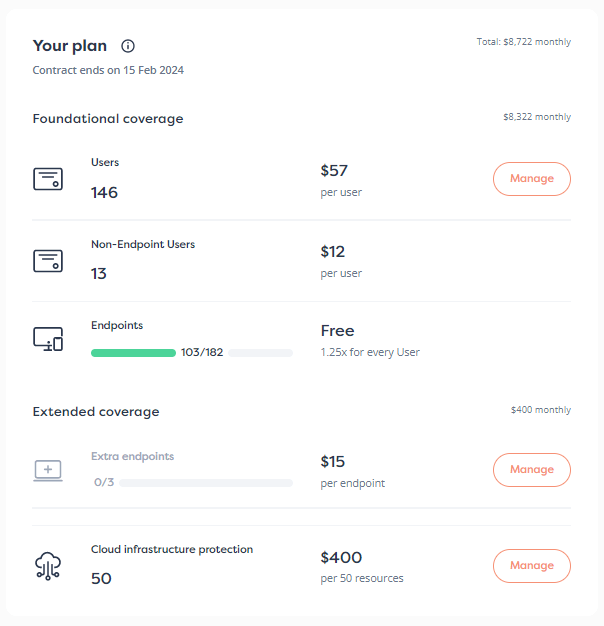
A good MSSP partner will include simple pricing. The pricing model shouldn’t confuse sales reps, which in turn would confuse customers. This extends beyond just being cost effective and needs to include:
The SolCyber “Howdy Partner” program has been designed to provide MSPs with the ability to bolster their cybersecurity offering with minimal effort. We help bridge the gap to enable you to better compete with more comprehensive MSPs and increase your ARPU, without taking on risk or resource investment.
Some of the benefits include:
To find out more about the SolCyber “Howdy Partner” program, visit www.solcyber.com/howdy-partner or contact us at howdy@solcyber.com

Kernel bug from way back in 2011 could have let guest users take over their host system.

Tragic death of “invisible” cyclist in road-race crash – would live tracking have helped?

Since networks have existed, Managed Security Services Providers (MSSPs) have been taking over and monitoring security investments, offering several tiers of service to their customers. With the rapid explosion of cyber threats, businesses that can’t afford the “platinum” coverage—we’re looking at you small and midsized businesses—are left wondering if their “basic” coverage will hold up against today’s sophisticated attackers. At SolCyber, we don’t believe in “gold” or “platinum” coverage. We live in a new binary world…you’re either protected or you’re […]




By subscribing you agree to our Privacy Policy and provide consent to receive updates from our company.